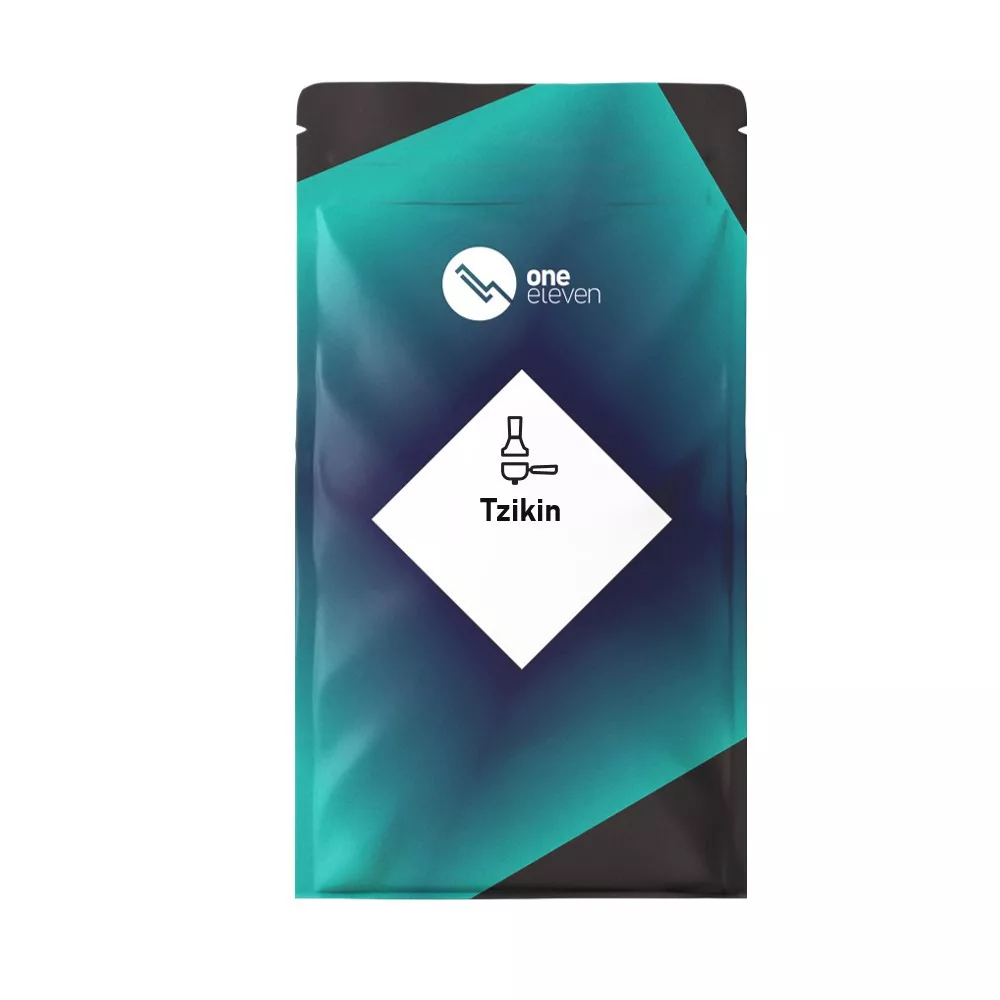
Tzikin guatemala specialty arabica coffee 200g
Coffee Grade: Huehuetenango SHB EP
Farm/Coop/Station: Various
Varietal: Bourbon, Catuai, Caturra, Pache
Processing: Fully washed
Altitude: 1,500 to 2,000 meters above sea level
Owner: Various
Subregion: Various
Region: Huehuetenango
Harvest Months: November – April
In our opinion: Red Grape, Tamarind, Almond

About the coffee:
In Mayan culture, the Tz’ikin is a nahual (spirit animal) and the keeper of Mayan lands. Inspired by the protective nahual, we contribute a portion of our profits from every bag sold. This premium goes to support "Coffee Kinder", a 35-day school program that enables kids ages 3 to 12 to continue learning while their parents are working as day laborers in harvest season activities.
Previously sold as Mam, the quality of our Tz’ikin blend remains the same, with the added benefit of supporting sustainable coffee production. The name change also recognizes the challenges that come with coffee farming in a changing climate.
Today, about 75% of Huehuetenango’s population are indigenous Maya. Tz’ikin is sourced from smallholders in a micro-region around La Libertad, Cuchamantes mountain range and San Pedro Necta municipalities in the Huehuetenango region.
Cultivation:
People have been farming the land in Huehuetenango for thousands of years. Traditional farming techniques include using manure from their sheep for organic fertilizer, rotating land to give the soil time to recover and harvesting communally. Farmers have also traditionally planted a wide variety of crops in a way that best utilizes the sharp altitude changes along Huehuetenango’s steep slopes.
Thanks to the region’s unique location, which brings in hot air from the west and cool air from the north, farms in Huehuetenango are able to cultivate coffee at heights that often exceed 2,000 meters above sea level. These conditions help produce the dazzling acidity and lively fruit notes so beloved in coffees from the region.
Harvest & Post-harvest:
Due to its remoteness, most producers in Huehuetenango process their own coffee. Fully washed home processing is the most common method.
Farmers selectively hand pick cherry and pulp it on their farms, usually with small hand-powered or electric drum pulpers. After fermenting, parchment is agitated to remove remaining mucilage and washed with clean water. All water used during pulping and washing will be filtered – usually through earthen holes – so that the organic solids do not contaminate local waterways.
Farmers typically lay parchment to dry on raised beds that are stacked on top of each other to maximize space. Patios are also frequently used.
Our exporting partner evaluates coffee for quality before finalizing the purchase at their purchasing site in Huehuetenango City. After purchase, parchment is sent to the dry mill where it rests until it is milled and prepared for export.
Coffee in Guatemala:
Guatemala boasts a variety of growing regions and conditions that produce spectacular coffees. Today, the country is revered as a producer of some of the most flavorful and nuanced cups worldwide. We are proud to work with several exceptional in-country partners to bring these coffees to market.
The Guatemalan coffee industry experienced a major setback with the 2010 appearance of Coffee Leaf Rust (CLR) in Latin America. The epidemic peaked in severity in 2012, and though CLR continues to affect some farms, Guatemala continues to produce high-quality, record-breaking coffees. In 2017, new and varied processing methods pushed prices at the Guatemalan Cup of Excellence contest to record highs.
The quality of coffee being produced in Guatemala is increasing, overall, due to the diversity of the industry’s producers. There are more and more small holder farmers producing exceptional coffee at high altitudes. Cooperatives are becoming more appealing to so many smallholders because they often offer farmers financing and other support for improving their farming and processing and are frequently able to offer higher prices for cherry than middlemen. Many cooperatives have initiated quality improvement training for farmer members and are becoming more adept at helping members market their coffee as specialty.